Slide 1 of 1 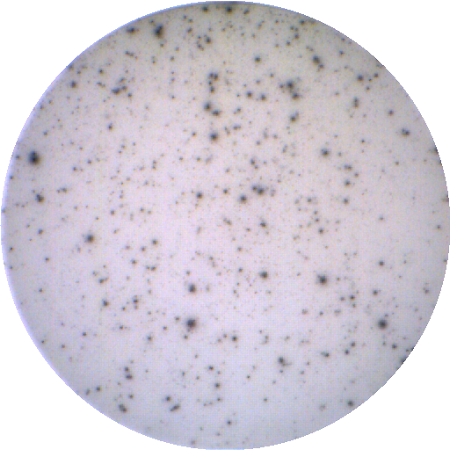
Rabbit CCL3 (MIP-1 alpha) ELISpot
- Catalog Number:
- SPOT2503U
- Availability:
- In stock
- Application:
- ELISpot
- 100% Homology:
- Oryctolagus cuniculus (rabbit)
 Powered by Bioz
 Components
| Usage | Quantity | Component | |
|---|---|---|---|
| Capture Antibody | 100 µg | KP1384U-100 | |
| Detection Antibody | 50 µg X 2 | KPB1385U-050 | |
| Standard Control | 5 µg | RP1018U-005 |
- The Rabbit CCL3 ELISpot assay is designed to evaluate CCL3-secreting cells by sensitively detecting and quantifying low-frequency chemokine-producing cells at the single-cell level. CCL3, also known as macrophage inflammatory protein-1 alpha (MIP-1α), is a chemokine that plays an important role in recruiting and activating immune cells such as monocytes, macrophages, and T lymphocytes to sites of infection and inflammation. In rabbits, CCL3 contributes to regulation of innate and inflammatory immune responses involved in host defense against pathogens and tissue injury. Measurement of CCL3 is particularly important in rabbit research because rabbits are widely used as models for infectious disease, inflammatory disorders, ophthalmic disease, and cardiovascular research, where immune cell recruitment and inflammatory signaling play key roles in disease mechanisms. This assay enables researchers to quantify CCL3-producing cells to better understand chemokine-mediated immune cell recruitment and inflammatory responses. The Rabbit CCL3 ELISpot kit contains a Capture Antibody, Detection Antibody, and Standard Control sufficient for the development of up to two (2) ELISpot assays. The included antibodies have been validated for performance in an ELISpot assay using the provided Standard Control. Additional materials and reagents required to complete the assay are not included. Individual components may also be purchased separately. Made in the USA. For research use only.
| Storage Conditions | 2°C to 8°C |
| Country Of Origin | USA |
Rabbit CCL3 (C-C motif chemokine ligand 3, also known as MIP-1α, macrophage inflammatory protein-1 alpha) is a pro-inflammatory chemokine that regulates recruitment and activation of immune cells during inflammatory and infectious responses in rabbits (Oryctolagus cuniculus). CCL3 primarily signals through the CCR1 and CCR5 receptors, promoting chemotaxis of monocytes, macrophages, dendritic cells, natural killer (NK) cells, and activated T lymphocytes to sites of infection or tissue injury. In rabbits, CCL3 is produced by activated macrophages, dendritic cells, epithelial cells, and lymphocytes in response to inflammatory stimuli such as microbial products and cytokines including TNF-α and IL-1β. CCL3-mediated leukocyte recruitment contributes to host defense and immune activation in conditions such as bacterial infections, viral diseases, and inflammatory tissue injury. In rabbit research, CCL3 is particularly relevant in models of inflammatory disease, infectious disease, and tumor immunology, where chemokine-driven immune cell infiltration influences tissue inflammation and immune responses. While CCL3-mediated immune cell trafficking supports pathogen clearance and immune surveillance, excessive or prolonged expression can contribute to chronic inflammation and tissue damage. As a regulator of leukocyte migration and inflammatory signaling, rabbit CCL3 supports studies of host–pathogen interactions, immune regulation, and inflammatory mechanisms relevant to both veterinary health and comparative biomedical research.
Citations
1 Set
Price: $1,200.00
RELATED MEDIA
